In today’s hyper-competitive retail landscape, businesses are constantly seeking innovative ways to boost sales and gain a competitive edge. One technology that has emerged as a game-changer in the world of trade promotions is Artificial Intelligence (AI). AI in trade promotions is transforming the way retailers plan, execute, and analyze their promotional strategies, leading to more effective and data-driven decision-making.
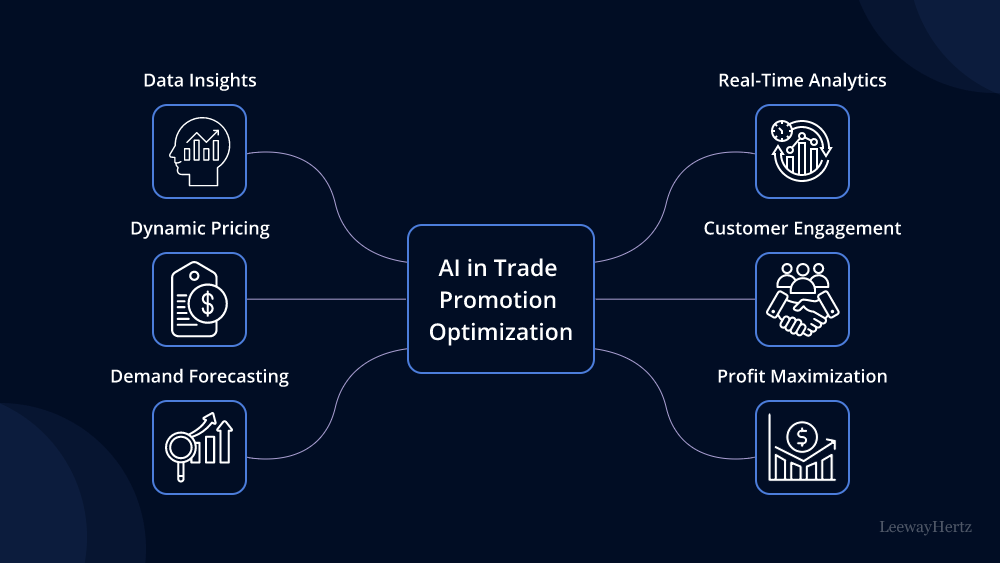
The Power of Data Analytics
One of the primary ways AI is revolutionizing trade promotions is through advanced data analytics. Retailers deal with vast amounts of data, from sales figures to customer demographics, and historical promotion data. AI can process this data quickly and efficiently to identify patterns and trends that might not be apparent to human analysts.
With AI, retailers can segment their customer base more effectively. By analyzing purchasing behaviors and preferences, AI can help identify which customers are more likely to respond positively to specific promotions. This enables retailers to tailor their promotions to individual customer segments, increasing the likelihood of success.
Optimizing Promotion Strategies
AI algorithms are also adept at optimizing promotion strategies. Traditionally, retailers would rely on gut instinct or historical data to determine the timing and type of promotions to run. However, AI can take into account a multitude of factors, such as seasonality, competitor activity, and even weather patterns, to make informed recommendations.
For example, if a retailer sells both winter coats and swimwear, AI can suggest promoting swimwear when the weather forecast predicts a heatwave in a specific region, while focusing on coats when temperatures are expected to drop. This dynamic approach to promotions ensures that retailers are always one step ahead, maximizing sales opportunities.
Personalized Promotions
AI in trade promotions also enables retailers to deliver highly personalized promotions to individual customers. By analyzing a customer’s purchase history and online behavior, AI can recommend products and promotions that are most likely to resonate with that customer.
Personalization not only enhances the customer experience but also increases the chances of conversion. When customers receive promotions that align with their preferences and needs, they are more likely to make a purchase and become loyal to the brand.
Dynamic Pricing Strategies
Dynamic pricing is another area where AI plays a crucial role in trade promotions. Retailers can use AI algorithms to adjust prices in real-time based on various factors, such as demand, inventory levels, and competitor pricing. This dynamic pricing strategy ensures that retailers remain competitive and maximize revenue.
For example, during a peak shopping period like Black Friday, AI can analyze the demand for specific products and adjust prices accordingly. If a product is in high demand, the price can increase slightly to capture additional revenue, and conversely, if demand is low, prices can be adjusted to encourage sales.
Inventory Management and Supply Chain Optimization
AI in trade promotions also extends its benefits to inventory management and supply chain optimization. Retailers can use AI-powered demand forecasting models to predict which products will be in high demand during specific promotions. This allows retailers to stock the right quantity of products, avoiding overstocking or understocking issues.
Moreover, AI can help streamline the supply chain by optimizing the logistics of delivering promotional products to stores or customers. This efficiency not only reduces costs but also ensures that products are available when and where customers want them.
Measuring and Improving ROI
Traditionally, measuring the return on investment (ROI) of trade promotions has been challenging. Retailers often had to rely on post-promotion analysis, which was time-consuming and lacked real-time insights. AI changes this by providing retailers with instant feedback on the performance of their promotions.
AI algorithms can analyze sales data as promotions are happening, allowing retailers to make adjustments on the fly. If a promotion isn’t performing as expected, retailers can modify it in real-time to improve results. This agility is a game-changer in the world of trade promotions, enabling retailers to maximize ROI more effectively.
Conclusion
AI in trade promotions is revolutionizing the retail landscape by providing data-driven insights, optimizing promotion strategies, personalizing customer experiences, implementing dynamic pricing, and improving inventory management. In a highly competitive market, harnessing the power of AI can make the difference between thriving and merely surviving. As AI technology continues to advance, retailers who embrace it are likely to stay ahead of the curve and achieve lasting success in the ever-evolving world of trade promotions.
 Techy Talks